← The Hommea JournalReal Estate
Mumbai Redevelopment Now Outsells New Launches for the First Time, JLL-NAREDCO Finds
Redevelopment's share of Mumbai housing sales has jumped to 15% in 2025-H1 2026, up from just 6% a decade earlier, a JLL-NAREDCO report finds.
By Ananya Rao/September 8, 2026/3 min read/MUMBAI, Maharashtra
The Number That Flipped
Redevelopment now accounts for 15% of Mumbai's housing sales in 2025 and the first half of 2026, up from around 6% during 2016-2021, according to a joint JLL-NAREDCO report released September 3 at NAREDCO Maharashtra's REIIS 2026 summit. What makes this notable isn't just the growth rate. It's that sales from redevelopment projects are now outpacing sales from fresh, greenfield launches for the first time, a genuine reversal of how Mumbai's housing supply has traditionally been built.
Why Mumbai Ran Out of Road
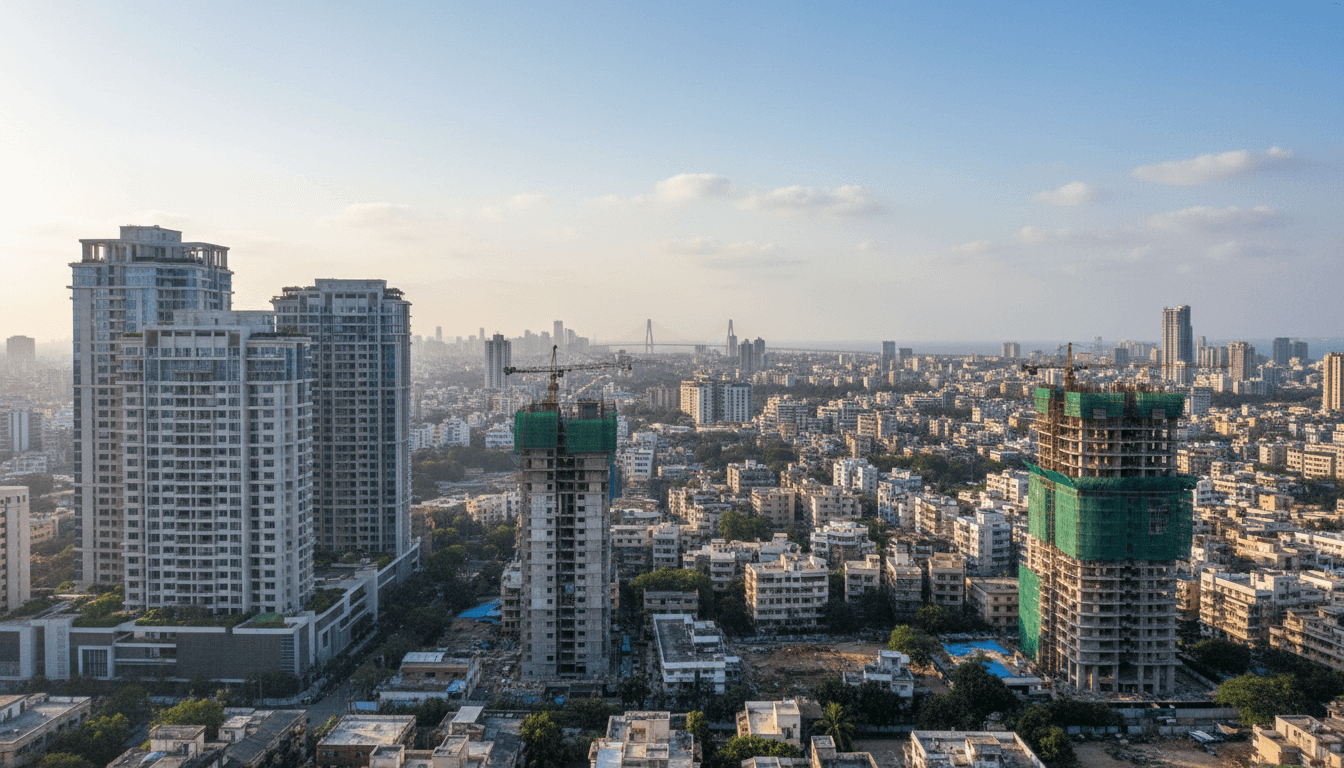
The underlying driver is blunt: Mumbai has essentially run out of vacant land to build on. The report counts roughly 13,500 cessed buildings across the city that need urgent replacement, with the Western Suburbs accounting for 22.4% of this ageing stock and South Mumbai another 14.2%. More than 1,000 redevelopment projects have launched since 2020, now making up 13% of the city's total residential supply, a scale that's turned redevelopment from a niche strategy into the city's default mode of adding housing.
Where the Money Is Actually Landing
The price data in the report gives a clearer read on where this shift is concentrated. Worli now commands ₹1-1.15 lakh per square foot, up 25-28% over three years, while Bandra-Khar sits at ₹90,000-95,000 per square foot with similar 25-30% growth. Further out, the Kandivali-Borivali belt has appreciated 20-25% to ₹32,000-37,000 per square foot. Borivali, Malad, Andheri, Vikhroli and Goregaon together account for around 36% of all redevelopment projects launched since 2020, so the momentum isn't confined to the most expensive pockets of the city.
Sodi's Read: Not a Cycle, a Structural Shift
Karan Singh Sodi, JLL's senior managing director for Mumbai MMR, Gujarat and Alternatives, told Business Standard that Mumbai's land scarcity has turned redevelopment "into an urban survival imperative" rather than a passing commercial opportunity. He pointed to 2,156 acres now in the slum-redevelopment pipeline, which the report says is four times all activity recorded over the previous 30 years combined. NAREDCO Maharashtra president Kamlesh Thakur, for his part, described redevelopment as having become the primary engine of the city's housing supply rather than a supplementary one.
A Category Worth Watching Beyond the Slum Narrative
Redevelopment in Mumbai often gets discussed narrowly, as slum rehabilitation or ceased-building replacement. The scale in this report suggests that it's broader than that: it now touches established, well-serviced neighbourhoods where older buildings are simply being replaced with denser, better-amenitised towers. Godrej Sky Terraces in Chembur is a useful example of this pattern in practice, a new tower built into a legacy precinct rather than a fresh land parcel, which is close to the template this report says is becoming the norm rather than the exception across the city.
The Question Resale Buyers in Older Buildings Keep Skipping
If you're weighing a purchase in an older Mumbai society, this data is a reasonable prompt to ask your building's managing committee whether redevelopment talks are underway or likely, since that changes both the near-term living experience and the long-term value case in ways a straightforward resale purchase doesn't. It cuts both ways: a redevelopment-bound building can mean disruption before it means upside.
By the numbers · MUMBAI, Maharashtra
38%
Capital-value growth, 2021–2025
50%+
Landscaped open area in new launches
24 mo
Window before supply catches demand