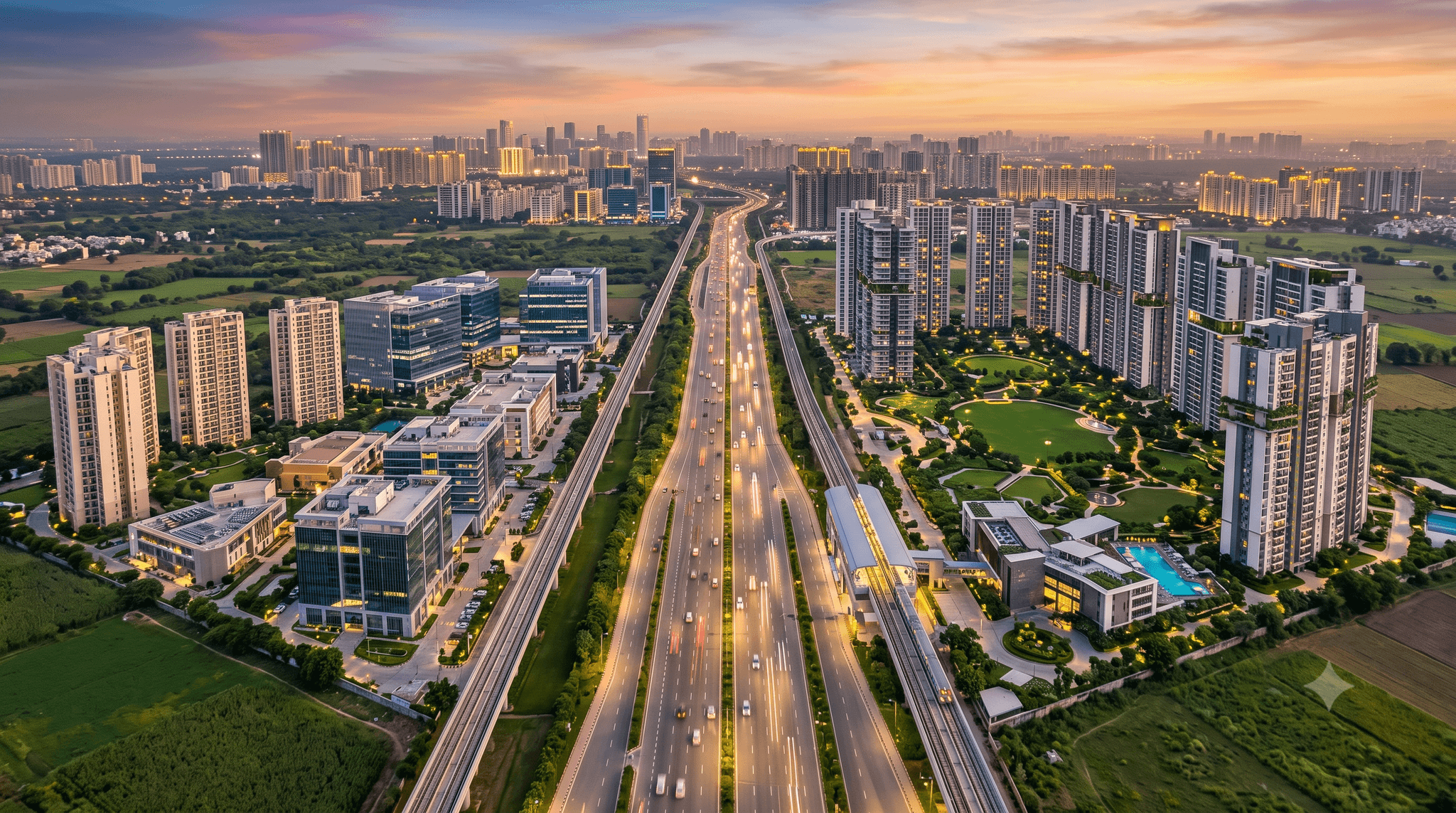
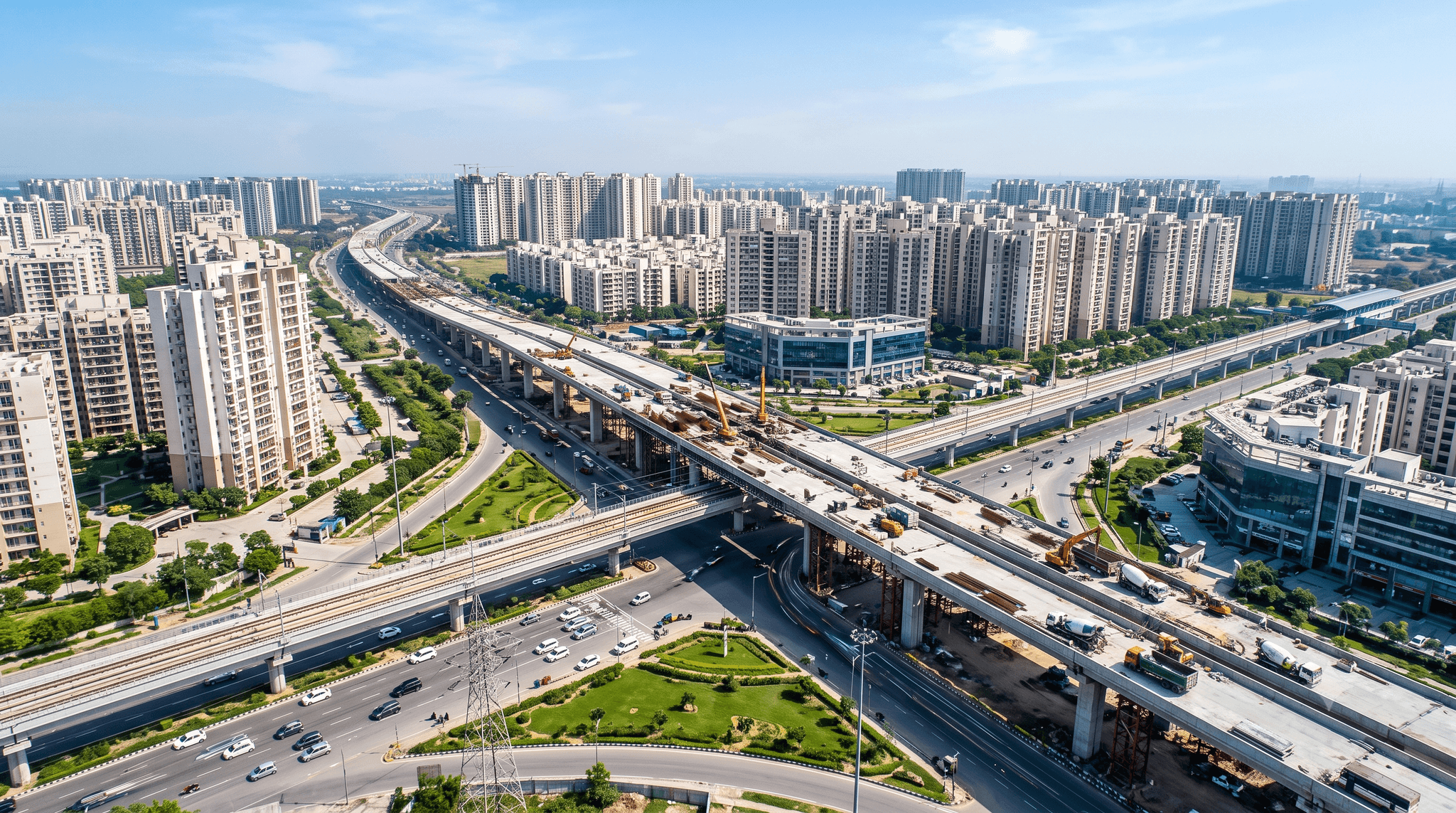
For many residents in Gurugram, bad internal roads are not a new problem. Broken patches, waterlogging during monsoon, missing footpaths, and uneven surfaces have been part of daily life for years. In areas like Sector 46, Sushant Lok 3, and Mayfield Garden, commuting often feels more like navigating obstacles than driving on proper roads.
That is why the Municipal Corporation of Gurugram starting work on four key road projects matters. With a total investment of ₹1,511.85 lakh, the focus is clearly on improving everyday movement within residential sectors, not just highways or large express corridors.
What Is Being Built on Ground
The scope of work is spread across multiple locations. In Sector 46, a new 18-metre-wide road stretching nearly 4.6 km is being constructed at a cost of ₹483.48 lakh, with completion targeted by September 2026. This alone could significantly ease traffic movement in one of the city’s dense residential pockets.
In Sushant Lok 3, about 6 km of internal roads in B and C blocks will be recarpeted, with a budget of ₹312.99 lakh. Meanwhile, a 4.2 km stretch from Omaxe Mall in Sector 49 to Rosewood City is being upgraded into a model road project, costing ₹501.51 lakh and expected to be ready by January 2027.
Mayfield Garden is also part of this push, with 1.2 km of roads being relaid at an estimated ₹213.57 lakh. Each of these projects has a defined timeline, stretching into early 2027.
Moving Beyond Patchwork Repairs
What stands out this time is the approach. Instead of simply fixing damaged portions, the model road plan aims to redesign roads in a more complete way. That includes proper footpaths, better drainage, organised parking, clear lane markings, and even underground cabling in some stretches.
This shift is important. In the past, roads were often repaired in parts, only to be dug up again for utilities. The result was a cycle of damage and temporary fixes. A more integrated plan, if executed properly, can reduce that repetition and improve durability.
Residents have long pointed out that poor roads are not just an inconvenience. They affect safety, especially for pedestrians, and worsen during rains when waterlogging becomes common. Addressing drainage and layout along with surfacing could finally tackle the root issues.
Why This Matters for the City
These projects may look small compared to large infrastructure announcements, but their impact is direct. Internal roads shape daily life. They influence how easily people move, how safe neighbourhoods feel, and even how areas are perceived by buyers and tenants.
Better roads can quietly lift the overall liveability of a sector. Cleaner surroundings, smoother traffic flow, and organised spaces tend to increase confidence among residents and potential investors. Over time, that can reflect in rental demand and property values.
The timelines now become crucial. If the work stays on track and quality is maintained, this could set a working model for similar upgrades across Gurugram. Residents have heard promises before. This time, the expectation is simple. Deliver roads that last and make everyday commuting easier.
By the numbers · Haryana
38%
Capital-value growth, 2021–2025
50%+
Landscaped open area in new launches
24 mo
Window before supply catches demand