← The Hommea JournalReal Estate
Gurugram RERA Clears 51 Projects Worth ₹34,000 Crore in H1 2026
HRERA Gurugram approved 51 projects worth nearly ₹34,000 crore in H1 2026, with just 11 mega-developments accounting for ₹25,000 crore of that total.
By Ananya Rao/July 28, 2026/3 min read/GURUGRAM, Haryana
A Lot of Money, Concentrated in Very Few Hands
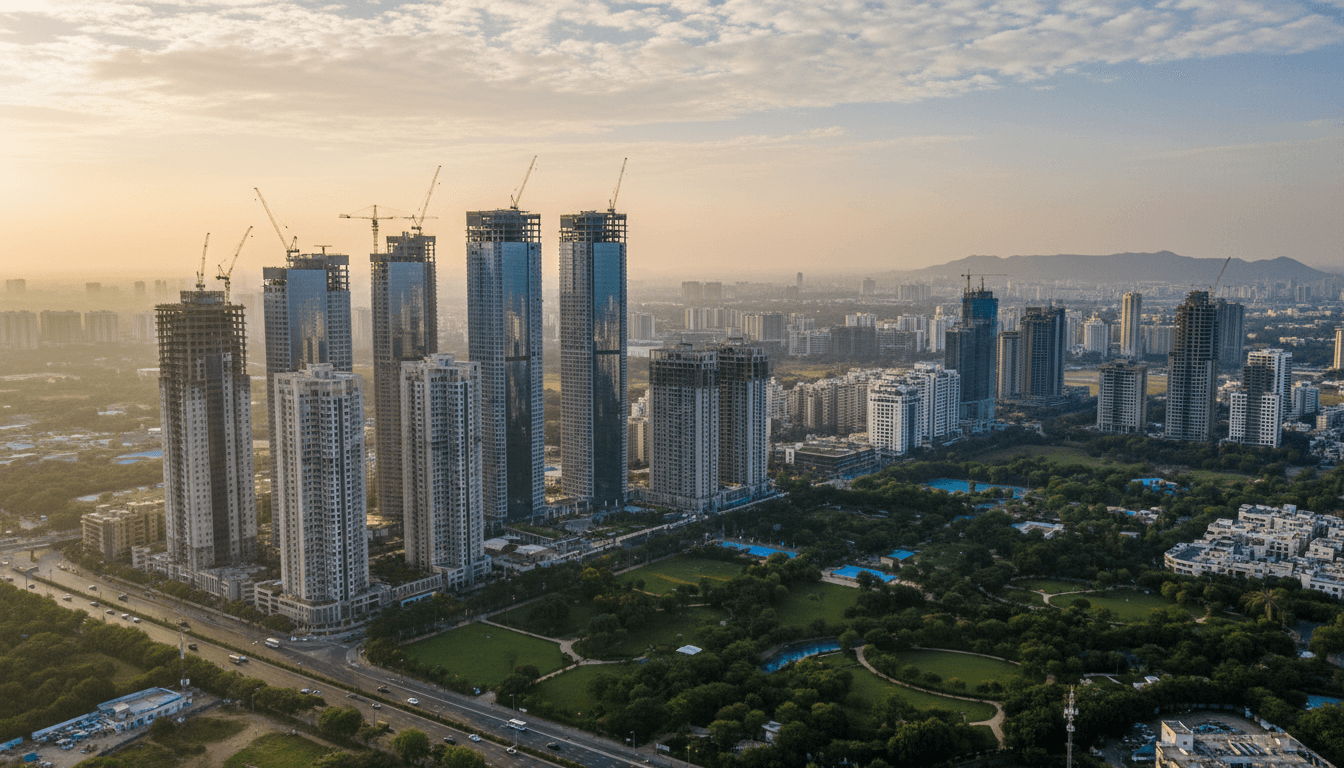
Fifty-one projects. Nearly $4 billion, close to ₹34,000 crore, approved by the Haryana Real Estate Regulatory Authority in Gurugram during the first six months of 2026 alone. That's already a big number. What makes it more interesting is where most of that money is actually landing, just 11 large projects account for roughly ₹25,000 crore of the total, which means a small handful of mega-developments are doing most of the heavy lifting while the rest of the pipeline fills in around them.
What's Actually Getting Built
According to HRERA's own data, those 51 approved projects add up to 16,727 units in total, split across 15,403 residential units, 1,084 commercial units and 240 industrial units. Residential clearly dominates the mix, and developers are leaning hard into premium and luxury formats rather than spreading bets across price points. That fits the pattern Gurugram has been building toward for a while now, a city increasingly known for branded residences and high-value housing rather than volume-driven, mid-segment supply.
This half also builds on real momentum. HRERA approved 131 projects worth close to ₹87,000 crore across all of 2025, so H1 2026's ₹34,000 crore isn't a spike out of nowhere, it's a continuation of a pipeline that's stayed genuinely busy.
Why Developers Are Crediting the Regulator, Not Just the Market
What's a little unusual here is how much of the credit is going to HRERA itself rather than pure market demand. The regulator has tightened its own process, stricter scrutiny of documents at registration, mandatory inspections by domain experts, compulsory quarterly progress reports, and public consultation notices before a project even gets registered. It's also been working through its backlog of consumer complaints, which matters more than it sounds, slow grievance redressal is one of the quiet things that erodes buyer trust over time.
Sudeep Bhatt, Director of Strategy at Whiteland Corporation, framed the approvals as proof the authority is enabling "timely, transparent and well-regulated" development, and said nearly $4 billion flowing into new projects reinforces Gurugram's position as a globally recognised premium market. Rishi Raj, CEO of Conscient Infrastructure, went further, arguing RERA has genuinely reshaped the sector's transparency and accountability, though he flagged a real gap worth watching, better alignment between RERA and the Insolvency and Bankruptcy Code when projects run into trouble. Jitender Yadav, Director at Roots Developers, echoed the same theme, that stronger compliance is pulling in developers who actually plan to deliver, not just launch.
What This Means for Anyone Watching Gurugram Right Now
Approval volume like this is a genuinely useful early signal, it tells you where developer confidence sits well before a single unit is marketed to buyers. If you're comparing options in this market, it's worth putting fresh approvals like these against how projects like Godrej Samaris are already performing, since a wave of large, well-capitalised launches landing in the same period tends to shift both pricing expectations and buyer choice across the whole micro-market, not just the new projects themselves.
References
- Business Today, "Gurugram RERA clears 51 projects in H1; ₹25,000 crore rides on 11 mega developments."
- Synergy Infracon, “Gurugram RERA Clears 51 Projects in H1; ₹25,000 Crore Rides on 11 Mega Developments.”
By the numbers · GURUGRAM, Haryana
38%
Capital-value growth, 2021–2025
50%+
Landscaped open area in new launches
24 mo
Window before supply catches demand