When a Boom Runs Ahead of the Buyers
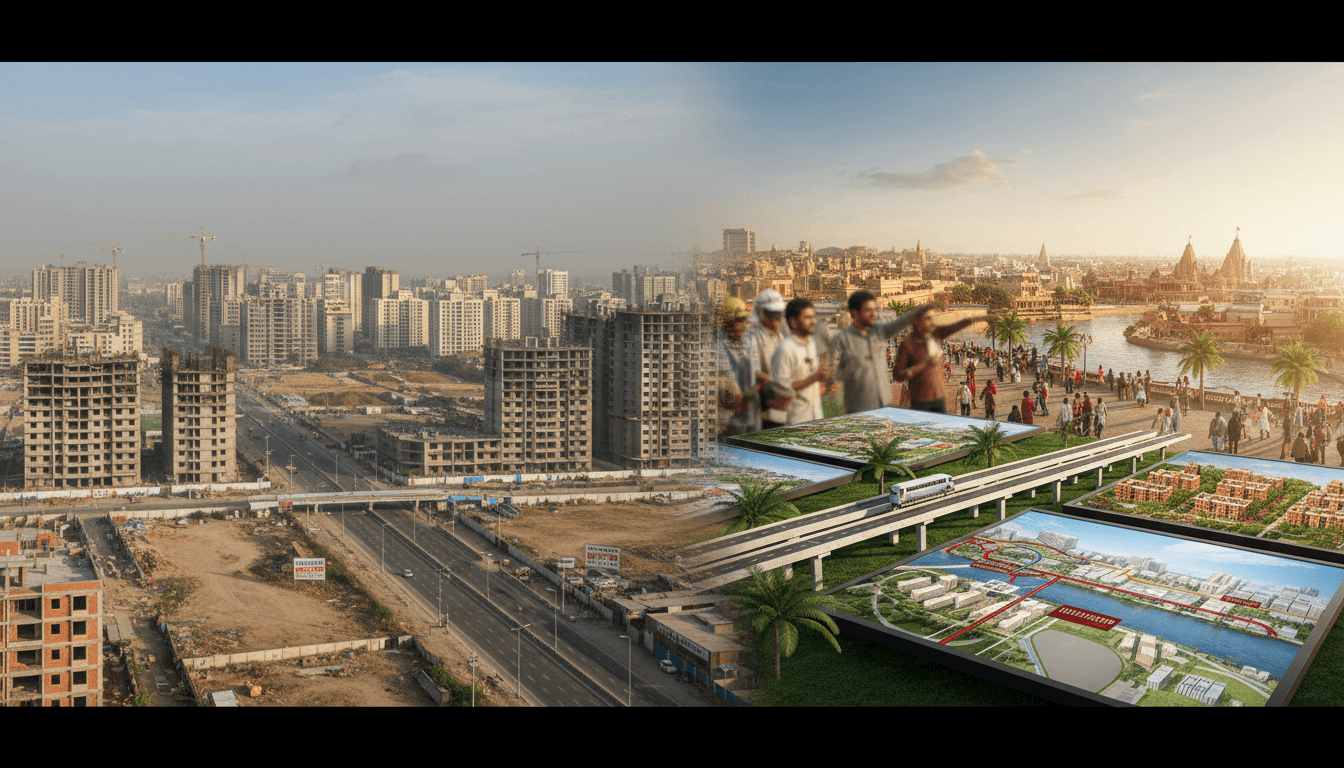
Ayodhya's real estate story has been one of the more dramatic in India over the past two years, land values in several micro-markets have appreciated anywhere from four to ten times, driven by the Ram Janmbhoomi Mandir and a genuinely staggering tourist inflow. But a boom built on appreciation alone eventually has to answer a harder question, is anyone actually buying to live there. Pratyush Pandey, Founder of AARE Consulting, put it plainly in comments carried by BusinessWorld, "Price appreciation has outpaced end-user absorption in many of these temple towns." That gap, between what land is worth on paper and what buyers are actually absorbing, is exactly where Ayodhya's momentum appears to be cooling.
Why Not Every Pilgrimage Town Converts Into a Real Estate Market
There's a broader lesson developers seem to be internalising here. The same BusinessWorld coverage flagged a common misconception, that every successful pilgrimage destination automatically becomes a successful real estate market. Long-term growth, the piece argued, depends on planned urbanisation, governance, quality infrastructure and permanent economic activity, not religious significance alone. That framing matters for understanding where capital is moving next within Uttar Pradesh.
Mathura and Vrindavan Are Picking Up the Momentum
Santhosh Kumar, Vice Chairman of ANAROCK Group, told Outlook Money that religious tourism, temple corridor redevelopment and government infrastructure investment are driving "a fundamental shift" across India's pilgrimage destinations, naming Ayodhya, Varanasi and Vrindavan as the clear leaders. Vrindavan specifically is backed by genuinely substantial infrastructure commitments right now, the Uttar Pradesh Braj Teerth Vikas Parishad has approved a ₹1,645 crore project linking the Yamuna Expressway to the Delhi-Agra Highway near Mathura, complete with a new bridge over the Yamuna.
Separately, the state government has approved extending the Yamuna Expressway itself to connect Noida, Vrindavan and Aligarh, specifically framed around linking the Banke Bihari Temple corridor to a dedicated six-lane expressway. Layer in the ₹26,000 crore Braj Development Plan and the Mathura Riverfront Project connecting 20 historic ghats, and the infrastructure case for this pairing looks considerably more substantial than Ayodhya's tourism-led surge alone.
A Real Physical Link to NCR's Own Growth Corridor
Here's a detail worth connecting directly to our own coverage this year: the Yamuna Expressway extension toward Vrindavan runs along the same corridor we've tracked extensively around Jewar Airport and the broader Noida Expressway belt. That's not a coincidence, it's the same piece of infrastructure doing double duty, supporting both NCR's residential growth and this emerging temple-town investment story further down the highway.
Also Read: Top Residential Areas in Noida: A Sector-by-Sector Guide for 2026
Why Developers Are Reading This as the Smarter Long-Term Bet
Abhinandan Lodha, whose firm has actively expanded into this space, told Outlook Money that scarcity of professionally managed, credible development is a major driver, "Professionally-managed projects with clear titles, infrastructure and lifestyle amenities remain scarce, creating strong demand for credible branded developments." That's a genuinely different pitch than Ayodhya's raw appreciation story, it's betting on organised, title-clear development filling a gap that informal land speculation can't.
What This Means for Investors Weighing Temple-Town Bets
Given how directly this connects to expressway infrastructure Hommea has already tracked extensively around Jewar and the Noida corridor, this is worth watching as a genuine extension of that same growth story rather than a completely separate market.
Anyone drawn to Ayodhya's headline appreciation numbers should weigh Pandey's caution seriously, land value climbing fast doesn't guarantee a liquid resale market, while Mathura-Vrindavan's infrastructure-first approach, expressway links, metro plans, riverfront redevelopment, offers a more conventional, checkable growth thesis to evaluate against.
By the numbers · LUCKNOW, Uttar Pradesh
38%
Capital-value growth, 2021–2025
50%+
Landscaped open area in new launches
24 mo
Window before supply catches demand