← The Hommea JournalReal Estate
Mumbai Office Vacancy Just Hit a 16-Year Low of 10.8%, and Rents Are Following It Up
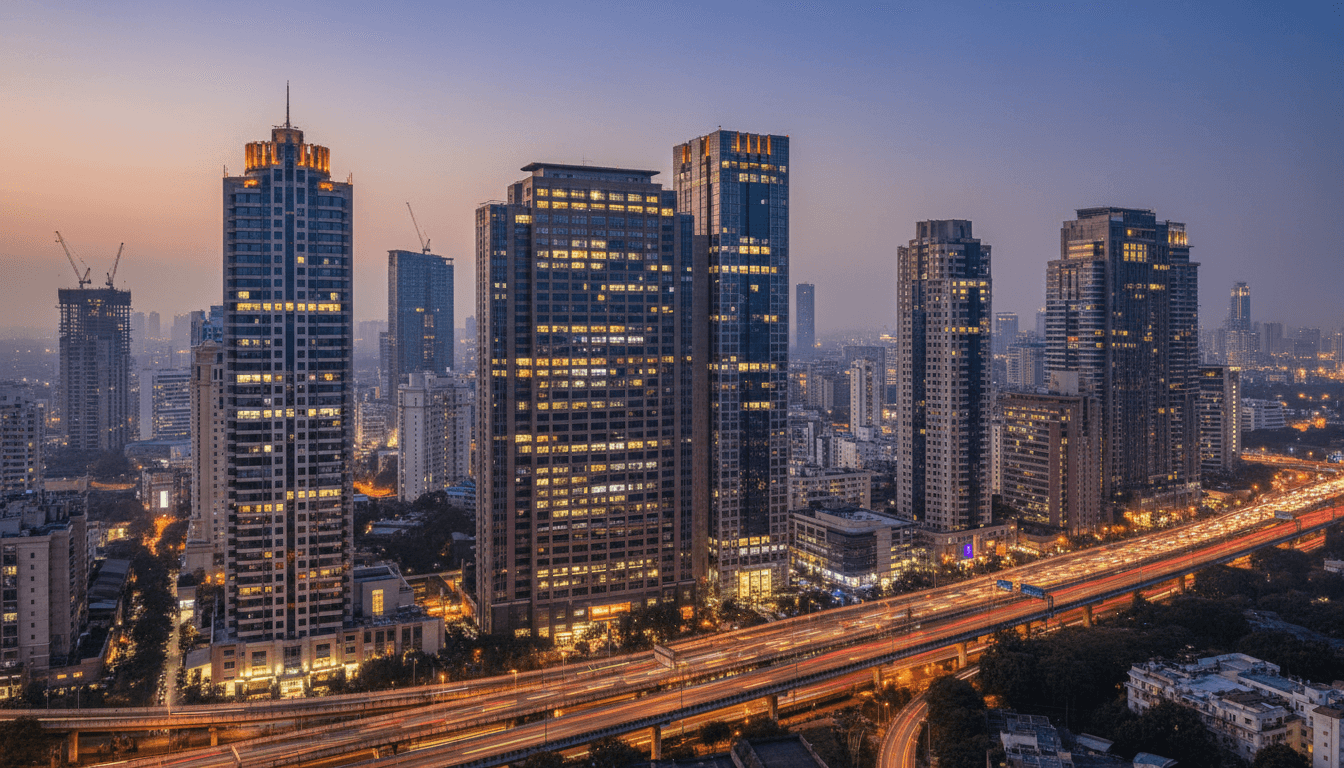
Mumbai's office vacancy fell to 10.8% in Q2 2026, its lowest level in 16 years, as net absorption kept outpacing new supply and rents rose across every major submarket.
By Ananya Rao/August 21, 2026/2 min read/MUMBAI, Maharashtra
Vacancy Keeps Falling Even as Leasing Slows
Mumbai's office market just posted one of its tightest readings in over a decade and a half. JLL's Q2 2026 data shows the city's overall office vacancy fell to 10.8%, down 10 basis points quarter-on-quarter and its lowest level in 16 years. What makes this notable is that it happened even as gross leasing activity itself moderated sharply, down 59.7% quarter-on-quarter to 1.69 million sq ft.
The explanation sits in the gap between leasing and absorption: occupiers pausing fresh decisions amid uncertainty didn't stop existing space from filling up faster than new supply could keep pace.
The First Half Still Beat Last Year
If you're worried the Q2 slowdown signals real weakness, the half-year number pushes back on that. H1 2026 leasing reached 5.88 million sq ft, up 17.8% from H1 2025, meaning the quarter's dip looks more like a pause after a strong Q1 than a genuine reversal. This lines up with what JLL reported nationally too, India's overall H1 2026 office leasing hit 37.9 million sq ft, its second-best first half on record, even as the pan-India market showed similar signs of occupiers taking a more measured approach quarter to quarter.
Who's Actually Renting Right Now
Demand composition tells its own story about where confidence sits. BFSI remained Mumbai's largest source of office demand in Q2, accounting for 29.5% of quarterly leasing, followed by flexible workspace operators at 23.8% and IT and ITeS companies at 20.3%. That's a genuinely different mix from what's driving demand nationally, where GCCs and tech have dominated recent quarters, Mumbai's office market is leaning more heavily on financial services and flex space specifically.
What This Means for Mumbai's Market Going Forward
Mumbai's tightening isn't an isolated blip either. JLL's broader India data shows the city's vacancy sitting at its lowest level in 16 years, alongside similar multi-year lows in several other major markets, suggesting this reflects a genuine structural shift in how fast space is getting absorbed relative to what's being built, not a one-quarter anomaly. For anyone tracking Mumbai specifically, that context matters: sustained tightness like this tends to keep pushing rents upward across submarkets rather than plateauing, especially in corridors where BFSI and flex operators continue expanding their footprint.
You Might Also Like: India's Biggest Cities in 2026: A Complete Guide to Population, Area, and Where Growth Is Headed Next
What JLL Expects Next
Looking ahead, JLL expects demand to be supported by significant pre-commitments already locked into new developments, though the consultancy also flagged that some ongoing transactions are seeing delayed decisions as occupiers weigh the impact of geopolitical uncertainty and AI-driven workforce changes on their real estate needs.
JLL's medium-term estimate puts annual Mumbai office supply at around 8 million sq ft against expected annual net absorption of 7.5 to 7.7 million sq ft, numbers close enough that vacancy is likely to stay tight rather than loosen meaningfully, assuming BFSI, IT/ITeS, flex, and consulting demand hold up as JLL expects.
By the numbers · MUMBAI, Maharashtra
38%
Capital-value growth, 2021–2025
50%+
Landscaped open area in new launches
24 mo
Window before supply catches demand