A Traffic Project With an Unusual Revenue Model
Bengaluru's proposed twin tunnel road, a 17-km stretch meant to cut travel time between the city's northern and southern halves, has drawn a new line of criticism that has nothing to do with traffic engineering. Citizen groups now contend the project is, at its core, a real estate play wearing an infrastructure label, and the way the concession has been structured gives that argument real weight.
How the Bidding Actually Worked
Adani Enterprises emerged as the lowest bidder for the project at a total concession value of ₹22,267 crore, more than double the state agency B-SMILE's own estimate of ₹11,000 crore for the combined packages. Under the modified Build-Operate-Own-Transfer model being used, the concession period isn't fixed, it runs until discounted toll revenue collected by the concessionaire equals the quoted value, meaning 30 years if toll collections run strong, stretching to 40 if they fall short.
The Detail Critics Are Focused On
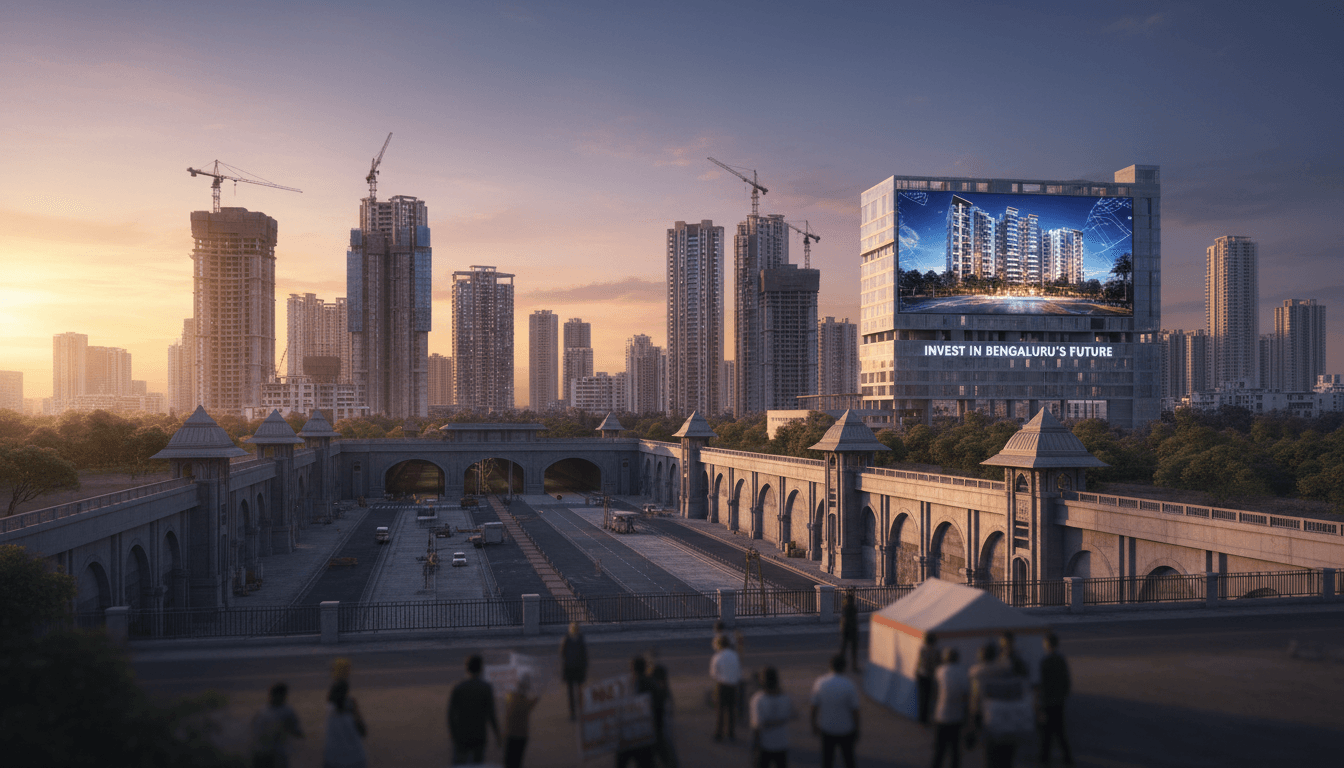
Here's the part drawing scrutiny: the total concession value explicitly excludes ancillary revenue, even though the concessionaire remains fully entitled to collect it. That ancillary revenue includes commercial real estate development at five prime city locations along the route, plus advertising and naming rights, and parking and access fees. Official estimates peg this ancillary revenue at approximately ₹30,000 crore over the concession period, revenue that sits largely outside the bidding metric the public and evaluators actually scrutinised.
Real Estate Coming to Some of Bengaluru's Most Sensitive Zones
To make the project commercially attractive to private bidders, the state government has offered relaxations in building norms along the corridor, and documents suggest high-rise buildings of 15 floors or more could come up in some of the city's most ecologically sensitive green zones. Lalbagh, in particular, has reportedly seen land marked out for construction at an intermediate station site, a detail that's alarmed conservation-minded citizens given the area's protected status.
A Project Already Under Fire on Other Fronts
This isn't the first wave of criticism the project has faced. The Save Bangalore Committee, a citizens' organisation, has separately called for the entire ₹42,000 crore project to be halted, citing unresolved mobility, environmental, geological and hydrological concerns. An expert committee reviewing the Detailed Project Report reportedly found 121 major and alarming flaws, and the committee has alleged portions of the report's underlying data were lifted from other studies. Scientists and urban planning experts who spoke at a citizens' convention on the issue, including TV Ramachandra and Prof CP Rajendran, described the project as economically unjustifiable and a genuine threat to the city's liveability, not just an engineering debate.
Why This Story Matters Beyond Bengaluru
What makes this worth watching nationally is the structural pattern, not just this one project. Large infrastructure concessions that exclude ancillary revenue from headline bidding figures can obscure the real value being handed to a private partner, and Bengaluru's case is a genuinely clear, well-documented example of how that gap works in practice. It's a governance question that applies wherever India builds infrastructure through public-private concessions, not just this one tunnel.
What This Means for Anyone Tracking Infrastructure-Linked Real Estate
At Hommea, our experts would suggest this case as a useful reminder for anyone evaluating property near large infrastructure projects anywhere in India. The headline concession value quoted in the news rarely captures the full picture of what a private developer stands to gain, and real estate rights bundled into infrastructure deals can reshape land use and density around a project in ways that aren't always disclosed upfront. It's the kind of detail worth digging into before assuming a project's public framing tells the whole story.
By the numbers · BENGALURU, Karnataka
38%
Capital-value growth, 2021–2025
50%+
Landscaped open area in new launches
24 mo
Window before supply catches demand