Sentiment Stopped Falling, It Just Hasn't Started Rising Yet
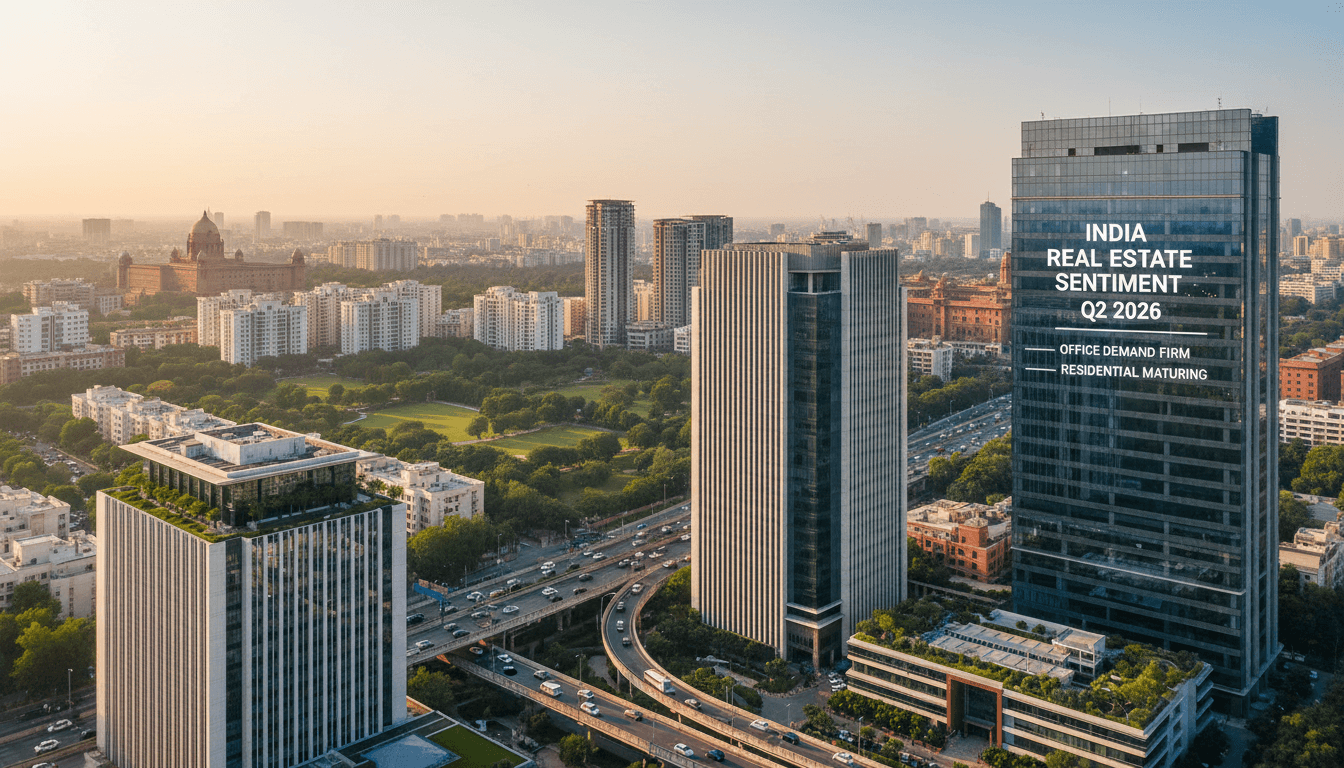
Real estate stakeholders across India aren't feeling optimistic right now. They aren't panicking either. That's roughly the takeaway from the Knight Frank-Naredco Real Estate Sentiment Index for Q2 2026, which put future sentiment at exactly 50, the neutral mark, for the second quarter running. Current sentiment slipped slightly, from 49 to 48, staying in pessimistic territory. But here's the part that actually matters: the drop has slowed down a lot. Compare that to Q1 2026, when sentiment fell off a cliff, from 60 all the way to 49. This quarter, the bleeding basically stopped.
Shishir Baijal, Chairman and Managing Director of Knight Frank India, said as much directly. Geopolitical tension, expensive energy, inflation, all of it is still weighing on the sector, he noted. But the sharper decline from last quarter has levelled off, and future sentiment is holding at neutral rather than sliding further. He described residential as moving into a normalisation phase after years of strong growth, while office space keeps performing well, propped up by steady leasing and genuine occupier demand.
Developers Are Cautious, Investors Are Warming Up
Not everyone's mood improved equally. Developer sentiment stayed flat at 51, unchanged from last quarter, still short of the optimism seen right after the pandemic. Financial institutions, banks and private equity players told a different story. Their sentiment rose from 50 to 53. That gap says something worth noting: the people building projects remain wary, but the people funding them are getting more comfortable.
Housing sales barely moved in H1 2026, up just 1% year-on-year, a sign the market is settling rather than surging. Even so, fewer stakeholders now expect residential demand to weaken over the next six months, down to 45% from 52% last quarter. And 74% expect prices to hold steady or climb further, which isn't exactly a market bracing for a downturn.
Office Space Keeps Carrying the Sector
If one segment is doing the heavy lifting here, it's the office. Transactions hit 48 million square feet in H1 2026, only a slight 2% dip from a high base last year, driven by continued expansion from global capability centres, tech firms and a wide mix of corporate occupiers. Most stakeholders, 74%, expect leasing to stay stable or improve over the coming months, and 81% expect rents to hold or rise, largely because quality supply in the best micro-markets remains genuinely limited.
Naredco's national president, Parveen Jain, framed the whole picture in fairly plain terms: residential is maturing, not weakening, and office continues to anchor the market. The pressure, he said, is coming from outside the sector, not from anything broken within it.
What This Means for Buyers Weighing Their Options
For anyone watching NCR specifically, this ties into a pattern already playing out on the ground, office-heavy corridors are pulling residential demand along with them as employment clusters grow. At Hommea, we've seen this show up clearly in Sector 150 Noida, where projects like ACE Parkway sit close enough to the region's expanding office belt that buyers are increasingly weighing commute alongside amenities. A sentiment index sitting at neutral isn't a green light to rush in, but it's also far from a reason to sit out, especially in micro-markets where office growth keeps outpacing what the sentiment numbers alone would suggest.
By the numbers · NEW DELHI, Delhi
38%
Capital-value growth, 2021–2025
50%+
Landscaped open area in new launches
24 mo
Window before supply catches demand