← The Hommea JournalReal Estate
Rs 31,000 Crore Cleared Under Urban Challenge Fund Within Weeks of Guidelines Being Finalised
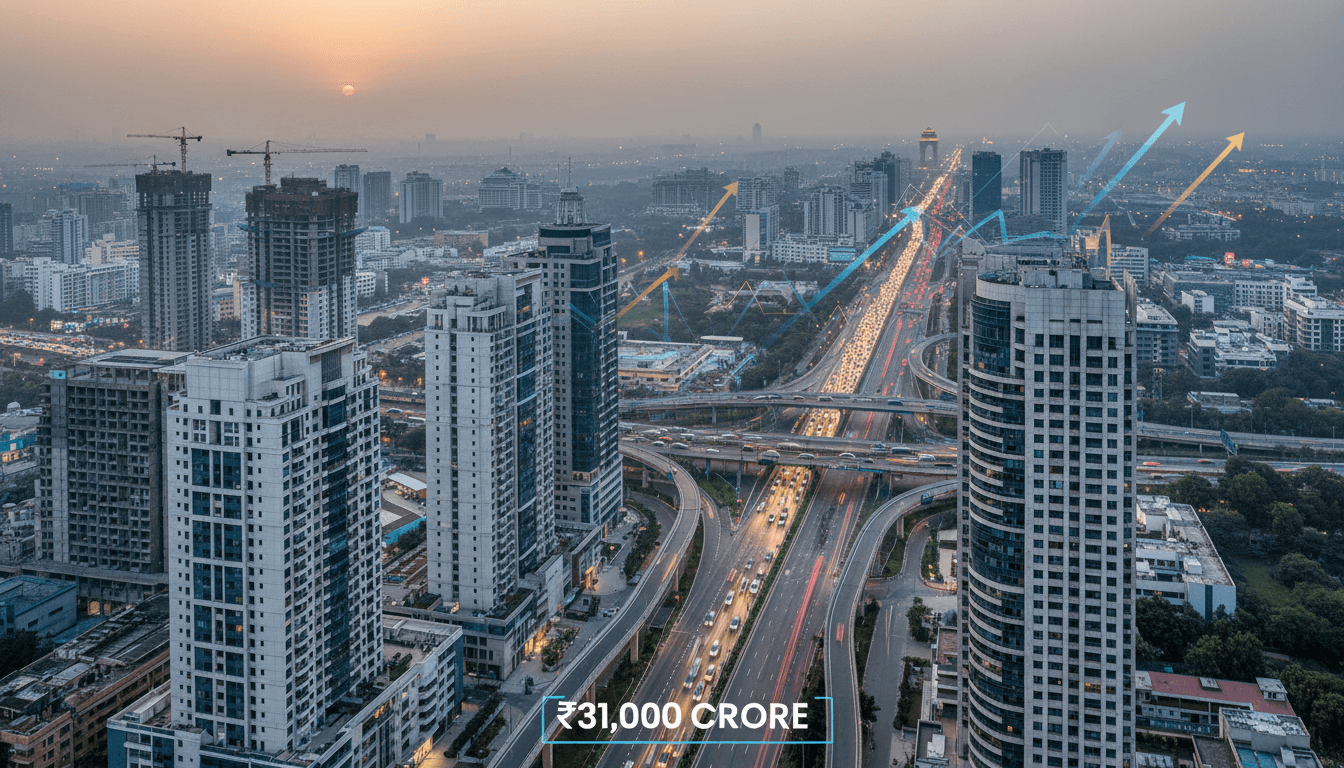
India's Urban Challenge Fund has already approved Rs 31,000 crore in projects within 20 to 25 days of its guidelines being finalised, officials said at the FICCI Urban Infrastructure Summit.
By Ananya Rao/July 27, 2026/3 min read/NEW DELHI, Delhi
25 Days, 31,000 Crore
Government schemes don't usually move this fast. Guidelines for the Urban Challenge Fund were finalised barely three weeks ago, and already Rs 31,000 crore worth of projects have cleared approval. D Thara, Additional Secretary at the Ministry of Housing and Urban Affairs, shared the number at the ninth edition of the FICCI Urban Infrastructure and Innovation Summit, and it's worth sitting with just how unusual that pace is for anything routed through central government machinery.
The financing mix behind those approvals tells its own story. Non-banking financial companies are putting up 44%, public-private partnerships another 22%, municipal bonds 5 to 7%, and commercial banks covering the rest. That's a genuinely diversified funding base, not one ministry writing one big cheque, which usually means a scheme was actually designed with private capital in mind from day one, rather than bolted on as an afterthought.
Why Cities Suddenly Matter This Much
Sanjay Kulshrestha, HUDCO's Chairman and Managing Director, dropped a statistic worth repeating on its own: Indian cities generate 60 to 70% of the country's GDP while sitting on barely 3% of its land. Say that out loud and it sounds almost implausible, until you remember how much of India's economic activity is genuinely concentrated in a handful of urban clusters. Kulshrestha framed the Urban Challenge Fund as a real break from how these schemes usually work, moving away from straightforward subsidies toward a competitive, challenge-based model where cities essentially pitch for funding rather than receive it automatically.
The mechanics back that up. Viability gap funding can cover up to half of a project's cost, split evenly between the Centre and state governments, with lenders and private investors expected to bring in the rest. That's a real financial commitment from the government, but it's structured to pull private capital in alongside it, not replace it.
Where the Real Constraints Sit
Not everyone at the summit was purely optimistic. Jagan Shah, Professor of Practice at IIT Delhi's Transportation Research and Injury Prevention Centre, made a pointed observation: tier-two and tier-three cities simply don't have the institutional capacity to drive urban renewal on their own, and the private sector will need to take on a bigger share of that strategic role than it currently does. That's less a criticism of the fund and more an honest acknowledgment of where implementation could actually stall.
JVS Ramakrishna, leading FICCI's Core Group on Urban Development, pushed the framing further, arguing that economic planning needs to shift toward city-economic regions rather than sticking to rigid municipal boundaries, with success measured by job creation and investment, not just infrastructure completed. FICCI Director General Jyoti Vij added that urban development today is as much about governance and technology as it is about concrete and steel.
What This Means Beyond the Headline Number
At Hommea, funding announcements like this one matter less for the crore figure itself and more for what they signal about where infrastructure spending is headed next, since better-funded urban infrastructure tends to show up in property demand two or three years later, not immediately. We've seen that pattern play out closer to home too, projects like Godrej Samaris in Gurugram have benefited from exactly this kind of sustained public infrastructure push over time, well before it shows up as a headline price jump. Rs 31,000 crore approved in three weeks is a strong opening signal. Whether it becomes a real shift in how Indian cities get built will depend entirely on execution over the next few years, not on this one announcement.
By the numbers · NEW DELHI, Delhi
38%
Capital-value growth, 2021–2025
50%+
Landscaped open area in new launches
24 mo
Window before supply catches demand
References
- RealtynMore, "Urban Challenge Fund Approves Projects Worth Rs 31,000 Crore, Says MoHUA Official," July 22, 2026.
- KNN India, "Urban Challenge Fund Approves Rs 31,000 Crore Projects, Says MoHUA," July 21, 2026.
- Economic Times Realty, "Rs 31,000 crore approved for urban development through Challenge Fund: MoHUA."