It usually starts at the griha pravesh. An aunt hands you a brass tortoise, a friend brings a wind chime, someone else leaves a painting of seven horses by the door. A week later you're standing in your new living room, holding all three, wondering which wall each one is meant for.
At Hommea, we help people buy and move into homes, and this is one of the questions we hear most once the keys are handed over. So we've written the guide we'd give a friend: 18 vastu items for home, where each one traditionally goes, what to avoid, and the places where Vastu experts themselves don't agree.
Quick answer: the best positive energy vastu items for home
The most widely recommended positive energy vastu items for home are a toran and nameplate at the main door, a brass urli with fresh flowers at the entrance, a Ganesha idol facing into the house, a tortoise in the north, a pair of elephants, wind chimes hung according to their material, Tulsi in the north or east, and mirrors on a north or east wall. Keep every item clean and unbroken. Across every source we checked, that rule comes up more often than any single object.
What Vastu Shastra items are (and what they aren't)
Vastu Shastra is a traditional Indian system of architecture. The Sanskrit word vastu means a dwelling or the site it stands on. The best-known classical texts, such as the Mayamata, the Manasara and the chapters on architecture in Varahamihira's Brihat Samhita (about the 6th century CE), deal mostly with site, layout, measurements and orientation.
The item-by-item décor advice you'll find online, including most of this list, comes largely from modern practice. Some of it is borrowed from Feng Shui, the Chinese placement tradition, and we flag those items below. Rationalists and scientists, including the astronomer Jayant Narlikar, have called many marketed Vastu claims pseudoscientific.
So here's how we'd frame it. Treat vastu shastra items for home as tradition, symbolism and a way of setting intention for a new space. The parts that hold up no matter what you believe are the practical ones: morning light, good airflow, and a home that isn't buried in clutter.
All 18 vastu items at a glance
| Vastu item | Best direction or spot | Best room | Avoid |
|---|---|---|---|
| Toran (bandhanwar) | Above the main door | Entrance | Dried or broken leaves left hanging |
| Nameplate | On or beside the main door | Entrance | Cracked, faded or hard-to-read plates |
| Urli (water bowl) | Entrance, or north/north-east | Entrance, living room | Stale water |
| Ganesha idol or image | Entrance facing inward, or north-east | Entrance, pooja room | South-facing placement; idol's back to the house |
| Om or Swastik symbol | On the main door or frame | Entrance | Placing it near footwear or bins |
| Wind chimes | Metal: west, north, north-west. Wood or bamboo: east, south-east, south | Balcony, window, living room | Directly above a bed or sofa |
| Tortoise | Metal: north or north-west. Crystal: north. Wood: east or south-east | Living room, study | Bathroom, kitchen |
| Elephant showpiece | North, or near the entrance facing inward; a pair in the bedroom | Entrance, living room, bedroom | Bathroom, kitchen |
| 7 running horses painting | South wall; east or north if south isn't free | Living room, office | Bedroom; horses running out of the door |
| Nature or sunrise painting | North or east wall | Living room | War, loss or lonely imagery |
| Mirror | North or east wall | Living room, dressing area | Facing the bed or the main door |
| Brass diya or lamp | North-east (pooja corner) | Pooja room | Chipped or blackened lamps left unused |
| Copper sun | East wall | Living room | Hidden behind furniture |
| Aquarium | North, east or north-east | Living room | Bedroom, kitchen |
| Tulsi plant | North, north-east or east, in sun | Balcony, entrance, window | South; a dark corner |
| Money plant | South-east | Living room | North-east |
| Lucky bamboo | East or south-east | Living room, desk | Letting the water go murky |
| Laughing Buddha (Feng Shui) | Facing the main door, raised | Living room, entrance | Floor, bathroom, kitchen |
How to find the directions in your flat
Most of us live in apartments, where the building's facing tells you little about where north sits inside your rooms. Here's the simple way to work it out.
- Stand near the centre of your flat with a compass app open.
- Hold the phone flat, away from steel almirahs, the fridge or speakers, which can throw the reading off.
- Note where north falls, then mark the eight zones (N, NE, E, SE, S, SW, W, NW) on a rough floor sketch.
- Repeat inside each room. Vastu guidance is usually applied room by room as well as to the whole home.
If the "right" wall is a window or a wardrobe, use the next-best direction given for that item. We've listed those below wherever sources offer one.
18 vastu items for home, one by one
1. Toran (bandhanwar)
Mango leaves, ashoka leaves or marigolds strung above the door are one of the oldest Indian ways of saying welcome. Fresh leaves are the traditional choice. Fabric, beaded or metal torans work too, as long as you keep them dusted.
Placement: above the main door. Take it down once the leaves dry out. A wilted toran says the opposite of what you meant.
2. Nameplate
Vastu guides consistently recommend a clear nameplate at the main door. It's also plain good sense: guests and delivery partners find you faster. Wood, brass and stone all work.
Placement: on the door or the wall beside it, at eye level, well lit. Replace it if it cracks or fades.
3. Urli (decorative water bowl)
An urli is a wide, shallow bowl, usually brass, filled with water and floating flowers or tea lights. Water is linked to prosperity in Vastu, which is why the urli turns up in so many entrance halls.
Placement: at the entrance, or in the north or north-east of the living room. Change the water every day or two. Still water left for a week becomes a mosquito nursery, and nobody wants that by the front door.
4. Ganesha idol or image
Ganesha, the remover of obstacles, is the most common idol at Indian entrances. Sources broadly agree on three things: he should face into the home, he shouldn't be placed facing south, and in a pooja room the north-east is preferred. A seated idol with the trunk curving to the left (vamamukhi) is the usual choice for homes.
Placement: inside the entrance facing inward, or in the north-east. Some families place two idols back to back at the door, one facing in and one facing out, so the idol's back is never turned to the household.
5. Om or Swastik symbol
Painted in kumkum, carved into the door, or fixed as a small brass motif, these symbols mark the threshold as auspicious. They cost almost nothing and suit any door style.
Placement: on the main door or its frame. Keep the shoe rack and dustbin well away from them.
6. Vastu wind chimes
Here's one most lists don't mention: wind chimes came into Indian homes largely through Feng Shui, and Vastu guides adopted them. In both traditions, the material decides the direction.
- Metal (brass, aluminium, steel): west, north or north-west
- Wood or bamboo: east, south-east or south
- Ceramic or clay: south-west, north-east or the centre of the home
Placement: near a window or on a balcony where a breeze actually reaches it. Don't hang one directly above where you sleep or sit. And be honest with yourself about sound. A metal chime outside the bedroom window on a windy night gets old fast, so a softer bamboo set is kinder for sleeping spaces.
7. Tortoise
The tortoise stands for stability and long life, and in Hindu tradition Vishnu's Kurma avatar is a tortoise. It's one of the most gifted vastu items for home, in brass, crystal or wood.
Placement: metal tortoises in the north or north-west, crystal ones in the north, wooden ones in the east or south-east. Face it into the room. Sources split on crystal tortoises (some say south-west or north-west), but north is by far the most common advice.
8. Elephant showpiece
Elephants carry strength, wisdom and good fortune, and they're tied to both Ganesha and Gajalakshmi. Elephant showpiece vastu advice is fairly consistent: north is the preferred direction, and near the entrance the elephants should face inward, as though walking into your home.
Placement: north, or flanking the entrance facing in. A pair in the bedroom is a traditional symbol for couples. A raised trunk is read as celebration; a lowered trunk as steadiness, and not bad luck, despite what you may have heard. Keep them out of bathrooms and kitchens.
9. Seven running horses painting
Probably the most famous Vastu painting in India. Seven horses stand for speed, drive and success.
Placement: the south wall is the most cited spot, linked to fame and recognition. If your south wall isn't free, the east (career growth) or north (wealth) are the usual alternatives. The horses should run into the room rather than towards the door, and the painting is generally kept out of bedrooms. Pick a complete, calm image with all seven horses clearly visible.
10. Nature and sunrise paintings
Vastu-friendly art is mostly about mood. Mountains, a sunrise, forests, flowering trees and calm water are the themes you'll see recommended again and again.
Placement: north or east walls of the living room. Skip images of war, loss, crying faces or lonely figures. Many guides also discourage abstract art, though we'd say a piece you genuinely love is worth more than one you put up out of duty.
11. Mirror
Mirrors are one of the few vastu items with a firm "don't": almost every source says a mirror shouldn't reflect the bed.
Placement: north or east walls. Don't hang one facing the main door. In the dining room, a mirror that reflects the table is a traditional sign of abundance. If a wardrobe mirror faces your bed and you can't move it, a simple cover at night is the usual fix. Replace cracked mirrors rather than living with them.
12. Brass diya or lamp
A lit diya at dawn and dusk is part of daily life in many Indian homes, and brass or copper lamps are the traditional choice.
Placement: the pooja corner, ideally in the north-east. One practical note: never leave a lit diya unattended, and keep it well clear of fabric.
13. Copper sun
A copper sun wall piece represents Surya and the morning light. It's a small, inexpensive way to make an east wall feel finished.
Placement: the east wall of the living room, where it's not hidden behind a cabinet or TV unit.
14. Aquarium
Moving water and healthy fish are linked to prosperity in Vastu. This is also the item where sources disagree most. Some place it in the south-east of the living room, a few even in the south-west, but north, east and north-east are by far the most common answers.
Placement: north, east or north-east of the living room. Keep it out of the bedroom and kitchen. Be realistic about upkeep: a tank needs a partial water change roughly every week, and a cloudy tank with struggling fish undoes the whole point.
15. Tulsi plant
Tulsi (holy basil) is sacred in Hindu homes and one of the easiest vastu items to get right, because the plant itself tells you when it's unhappy.
Placement: north, north-east or east, somewhere it gets direct sun. Avoid the south and keep it out of the kitchen. In a flat, an east-facing balcony or a sunny window ledge works well.
16. Money plant
The money plant (pothos) is linked to growth and prosperity, and it survives in almost any light, which explains its popularity in apartments.
Placement: south-east of the living room. Most guides say to avoid the north-east. Many families also train the vine to climb upward rather than trail on the floor. If you have pets, keep it out of reach: pothos is toxic to cats and dogs if chewed.
17. Lucky bamboo
Despite the name, lucky bamboo isn't true bamboo. It's a dracaena, and the custom of keeping it comes from Feng Shui rather than classical Vastu. It's still a favourite for desks and side tables.
Placement: east or south-east. Change its water weekly so the stems don't rot.
18. Laughing Buddha (a Feng Shui item)
The Laughing Buddha is Budai, a Chinese folk figure, not Gautama Buddha. He's a Feng Shui symbol of happiness and plenty that Indian homes have taken to warmly, so we've included him with that label attached.
Placement: facing the main door, raised off the ground. Feng Shui guides often suggest a table about 30 inches high. Never on the floor, in a bathroom or kitchen, or on top of the TV.
Other items you'll see recommended
You'll also come across Vastu pyramids, crystal or agate trees, salt lamps, camphor, bowls of sea salt, Arowana fish figures, mandarin ducks and evil eye charms. Some of these belong to Indian practice, like camphor in the pooja room. Others travelled in from elsewhere: the Arowana and mandarin ducks from Feng Shui, the evil eye from folk traditions around the Mediterranean and West Asia. None of that makes them wrong for your home. It's just worth knowing what you're buying.
Vastu decor room by room
If you'd rather plan by room than by item, here's the same advice regrouped.
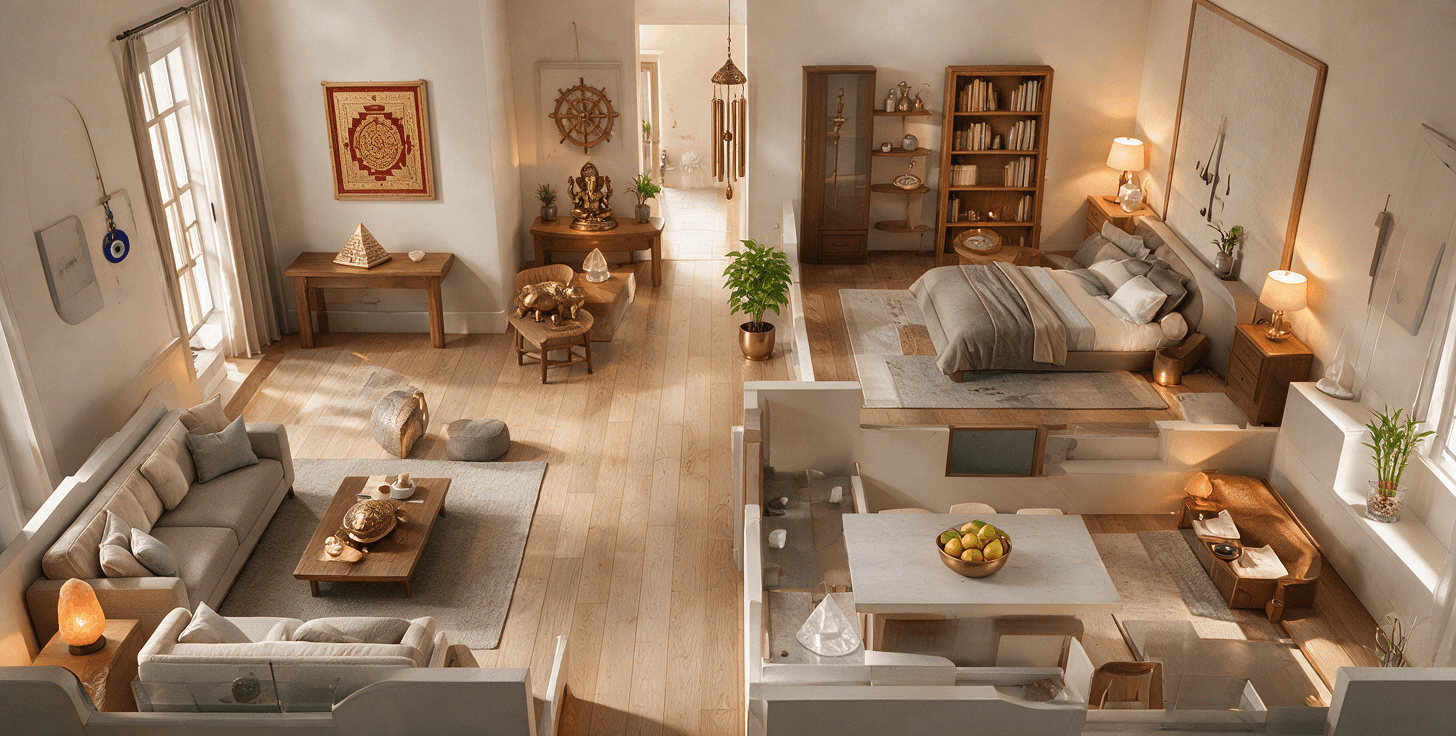
Main entrance. Toran above the door, nameplate beside it, an urli with flowers, a Ganesha idol facing in, and an Om or Swastik on the frame. Keep shoes in a closed rack, keep the dustbin away from the door, and make sure the entrance is well lit at night.
Living room. The 7 horses painting on the south wall, nature art on the north or east, an aquarium in the north, east or north-east, the money plant in the south-east, and a copper sun on the east wall. If you use a metal wind chime, a west or north-west window is the spot. Many Vastu guides also suggest keeping heavier furniture along the south and west walls.
Bedroom. A pair of elephants or swans is the traditional choice for couples. No mirror facing the bed, no 7 horses painting, and if you want a chime, choose soft bamboo over metal.
Pooja corner. North-east if your layout allows it. A brass diya, a small bell, camphor, and idols in good condition. Avoid a corner that shares a wall with a toilet.
Dining area. A mirror that reflects the table, and fresh flowers in the centre.
Study or home office. A tortoise in the north and a clutter-free desk. Many guides suggest sitting so you face north or east while you work.
Balcony. Tulsi in the east or north, and wooden or bamboo chimes on the east side.
Home decoration vastu mistakes to avoid
Most home decoration vastu advice is about what to add. In our experience, what you take away matters just as much.
- Keeping broken things. Chipped idols, cracked mirrors and stopped clocks top almost every Vastu "avoid" list. Repair them or let them go.
- Dead plants and dried flowers. Fresh is the whole point. Thorny plants like cactus are also commonly kept out of the house.
- A cluttered entrance. A pile of shoes and parcels by the door is the first thing you, and every guest, walk into.
- Buying too much. Five well-placed items look better and feel calmer than twenty crammed onto one shelf.
- Disrespectful placement. Deity images on the floor, in bathrooms or at the foot of the bed are widely discouraged.
- Expecting décor to fix a structural problem. A wind chime won't cure a dark, damp flat with no cross-ventilation. If you're still house-hunting, check the light and airflow before anything else.
Buying tips: how to choose vastu items that last
- Check if it's really brass. Solid brass isn't magnetic. If a fridge magnet sticks, you're holding plated iron or steel.
- Get the scale right. A small urli vanishes in a big foyer, and a huge painting overwhelms a compact living room. Measure the wall or table first.
- Prefer natural materials. Brass, copper, wood, stone and clay age well. Resin and plastic tend to look tired within a year or two.
- Buy from makers when you can. Moradabad is famous for its brass work, and many regional crafts make lovely vastu items for home at fair prices.
- Think about kids and pets. Heavy idols on low tables, glass tortoises and toxic plants all need a safe spot.
Buying a home? Vastu starts before the decor
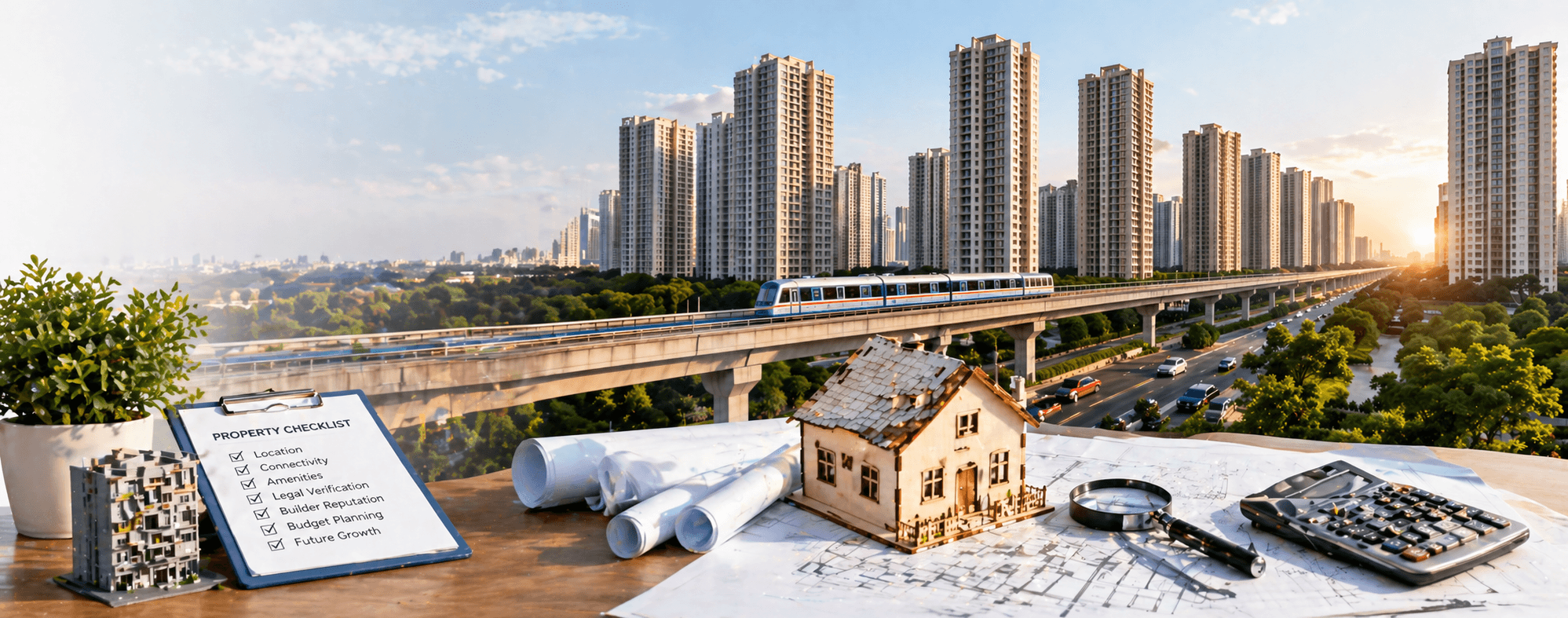
Items are the finishing touch. The big Vastu questions buyers ask us about are structural: which way the main door faces, where the kitchen sits, and whether the master bedroom is in the south-west. Those are fixed the day you sign.
So if Vastu matters to you, ask for the floor plan and the facing of a flat before you visit, not after. At Hommea, we'd much rather you find the right layout first and add the urli later than fall for a flat and spend years trying to fix it with décor.
New home, a few thoughtful pieces, a place for everything. That's a good start, whatever you believe about energy. And if you're still looking for the home itself, we're happy to help you find one that feels right the moment you walk in.
FAQs
These go at the end of the post under the heading "Frequently asked questions about vastu items for home". Each answer leads with the direct reply so it can be used word for word in FAQPage schema.
The vastu items most often recommended for home are a toran, a nameplate, a brass urli, a Ganesha idol, a tortoise, a pair of elephants, wind chimes, a 7 horses painting, mirrors, a copper sun, an aquarium, and plants like Tulsi and money plant. Place each in its suggested direction and keep it clean.
For positive energy, Vastu guides favour items tied to light, water and nature: a brass diya in the north-east, an urli with fresh flowers at the entrance, Tulsi in a sunny north or east spot, and calm nature paintings on north or east walls. A clutter-free home matters more than any one object.
Hang metal wind chimes in the west, north or north-west, and wooden or bamboo chimes in the east, south-east or south. Ceramic chimes suit the south-west, north-east or centre. Choose a window or balcony that catches a breeze, and avoid hanging any chime directly over a bed or seating area.
An elephant showpiece is best placed in the north, or near the main entrance facing inward, as if walking into the home. A pair of elephants in the bedroom is a traditional symbol for couples. Keep elephant figures out of bathrooms and kitchens.
The best vastu shastra items for the main entrance are a fresh toran above the door, a clear nameplate, an Om or Swastik symbol, a brass urli with flowers, and a Ganesha idol facing into the home. Keep the entrance well lit and free of shoes, parcels and dustbins.
Not originally. The Laughing Buddha is Budai, a Chinese folk figure used in Feng Shui, not Gautama Buddha and not part of classical Vastu texts. Many Indian homes keep one anyway. If you do, place it raised off the floor, facing the main door.
Place a metal tortoise in the north or north-west, a crystal tortoise in the north, and a wooden tortoise in the east or south-east. Face it into the room. Keep tortoise figures out of the bathroom and kitchen.
The south wall is the most commonly recommended spot for a 7 running horses painting. If the south wall isn't available, the east or north wall is the usual alternative. Make sure the horses run into the room, not towards the door, and keep the painting out of bedrooms.
Vastu items are usually offered as remedies for minor issues, but they can't change a flat's structure, light or ventilation. If you're buying, check the entrance direction, kitchen position and natural light first. Décor works best as the finishing touch on a layout you're already happy with.
Avoid broken idols, cracked mirrors, stopped clocks, dead plants, dried flowers, thorny plants like cactus indoors, and paintings of war or sorrow. Vastu guides also discourage clutter near the main door and placing deity images on the floor or in bathrooms.
Popular griha pravesh gifts include a brass urli, a pair of elephants, a tortoise, a Tulsi plant in a good pot, a copper sun, or a brass diya. Pick natural materials and ask the family about their tradition first, since practices vary across regions and communities.
FILED UNDER