← The Hommea JournalReal Estate
Dubai Home Prices Fall for the First Time Since 2021, Cavendish Maxwell Data Shows
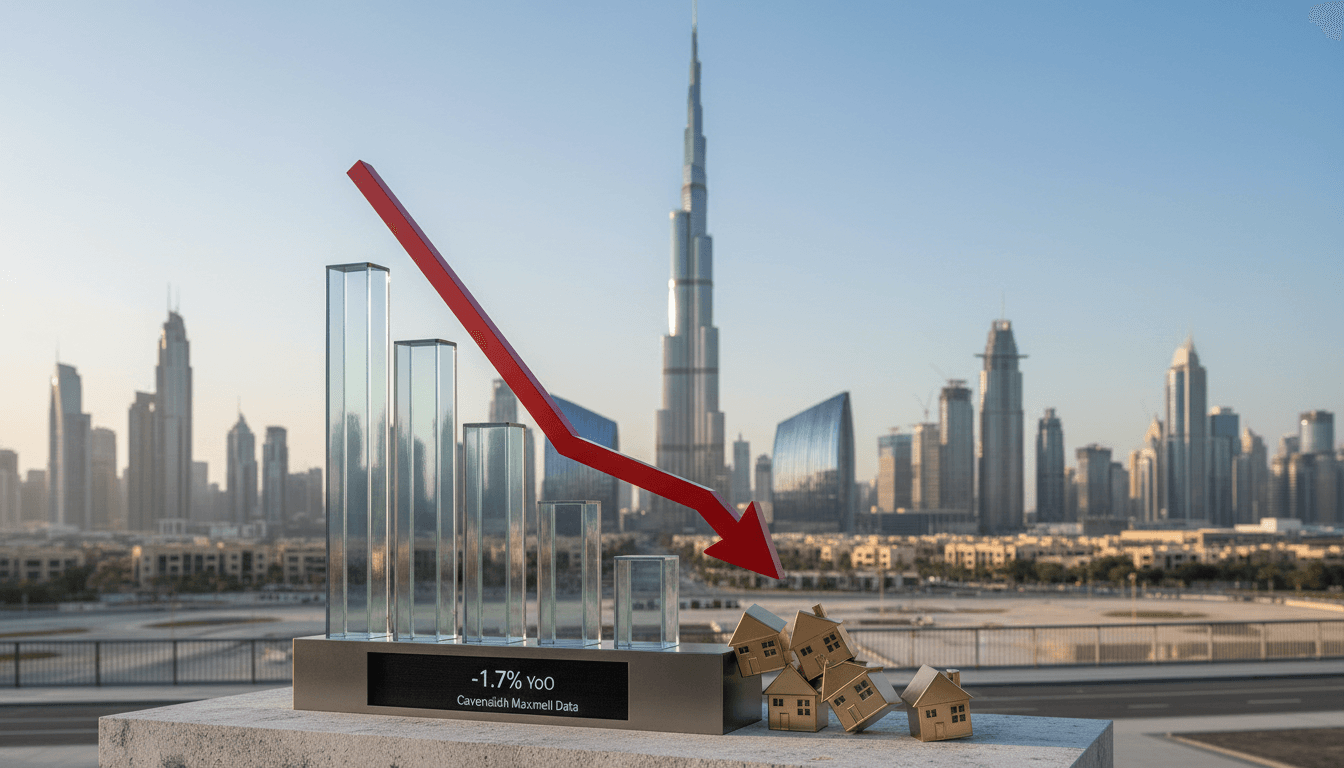
Dubai's average residential prices fell 1.7% year-on-year in August, the first annual decline since 2021, according to consultancy Cavendish Maxwell.
By Ananya Rao/September 8, 2026/2 min read/DUBAI, United Arab Emirates
What the Data Actually Shows
Average residential prices in Dubai slid to AED 1,636 per square foot in August, down 1.7% from the same month last year, according to Cavendish Maxwell's latest market data. It's the first time prices have fallen on a year-on-year basis since early 2021, when the pandemic was still weighing on the emirate's property market. Over the last three months alone, prices have eased 1.3%, so this isn't a one-off blip against an otherwise flat trend line.
Sales Are Down Sharper Than Prices
The volume side of the market tells a bigger story than the price figure does. Residential sales totalled AED 23.4 billion in August, and year-to-date transaction value for the first eight months of 2026 sits at nearly AED 270 billion, which is 24% below the same period in 2025. Around 10,900 homes changed hands in August, about 14% fewer than in July, though Cavendish Maxwell attributes part of that monthly dip to the usual summer slowdown rather than reading it as a standalone warning sign.
Why the Consultancy Isn't Calling This a Crash
Ronan Arthur, Cavendish Maxwell's director and head of residential valuation, told The Week that the Dubai market is moving through "a more measured phase" after a stretch of unusually strong sales and sustained price gains.
He added that demand fundamentals remain intact, but near-term activity is being shaped by fewer new launches and regional uncertainty rather than by buyers losing interest in the city outright. Off-plan properties still made up roughly three-quarters of all August sales, which suggests developer financing structures and payment plans continue to pull buyers in even as headline prices soften.
The Longer Trend Line Behind One Month's Dip
This slowdown didn't arrive out of nowhere. Cavendish Maxwell's own full-year 2025 data shows residential prices rose 12.1% that year, already decelerating from 16.5% growth in 2024, while new project launches in the first quarter of 2026 fell nearly 57% year-on-year to nudge the market toward a more measured pace. Read against that backdrop, August's 1.7% dip looks less like a sudden reversal and more like the tail end of a deceleration that's been building for close to two years.
Dubai Cools While India's Luxury Corridors Keep Climbing
If you're an Indian investor who's put money into both markets, or is deciding between them, this is a useful moment to run the comparison honestly rather than assume Dubai's tax-free structure automatically wins. Segments of India's own luxury and ultra-luxury housing market, particularly in Gurugram and Mumbai, have posted double-digit annual appreciation through 2026 even as Dubai's growth curve bends downward.
Neither market is a like-for-like substitute for the other given the very different regulatory, currency and exit-liquidity considerations involved, but a genuine allocation decision should weigh Dubai's current softening against where Indian metros are actually tracking right now, not against where Dubai stood two years ago. You can explore Our coverage of India's residential markets for the comparison points on the domestic side.
By the numbers · DUBAI, United Arab Emirates
38%
Capital-value growth, 2021–2025
50%+
Landscaped open area in new launches
24 mo
Window before supply catches demand