A Property Empire Built Over Two Decades
Lionel Messi's off-field earnings tell a story that's easy to miss if you're only tracking his career on the pitch. Since retiring from international football with Argentina last week after 21 years of national-team duty, his real estate holdings, built quietly across three continents over more than fifteen years, are worth a closer look on their own terms.
The Property That Started It All
Messi's first major real estate purchase came in 2009, a family compound in Castelldefels, a coastal town roughly 15 miles outside Barcelona, bought for around $2 million right as he won his first Ballon d'Or. Over more than a decade, he poured additional millions into the property, including reportedly buying out a neighbouring house because of noise complaints, and it's now estimated to be worth roughly $7 million. The compound includes a gym, spa, home theatre, pool, and a personal-size soccer pitch, and despite relocating his primary base to Miami, Messi has said in past interviews that he and his family still hope to eventually move back to Barcelona.
Worth Reading: How SRK, Sachin Tendulkar and 3 Other Indian Icons Built Multi-Crore Property Portfolios
The Real Structural Story: A Football Star Running His Own REIT
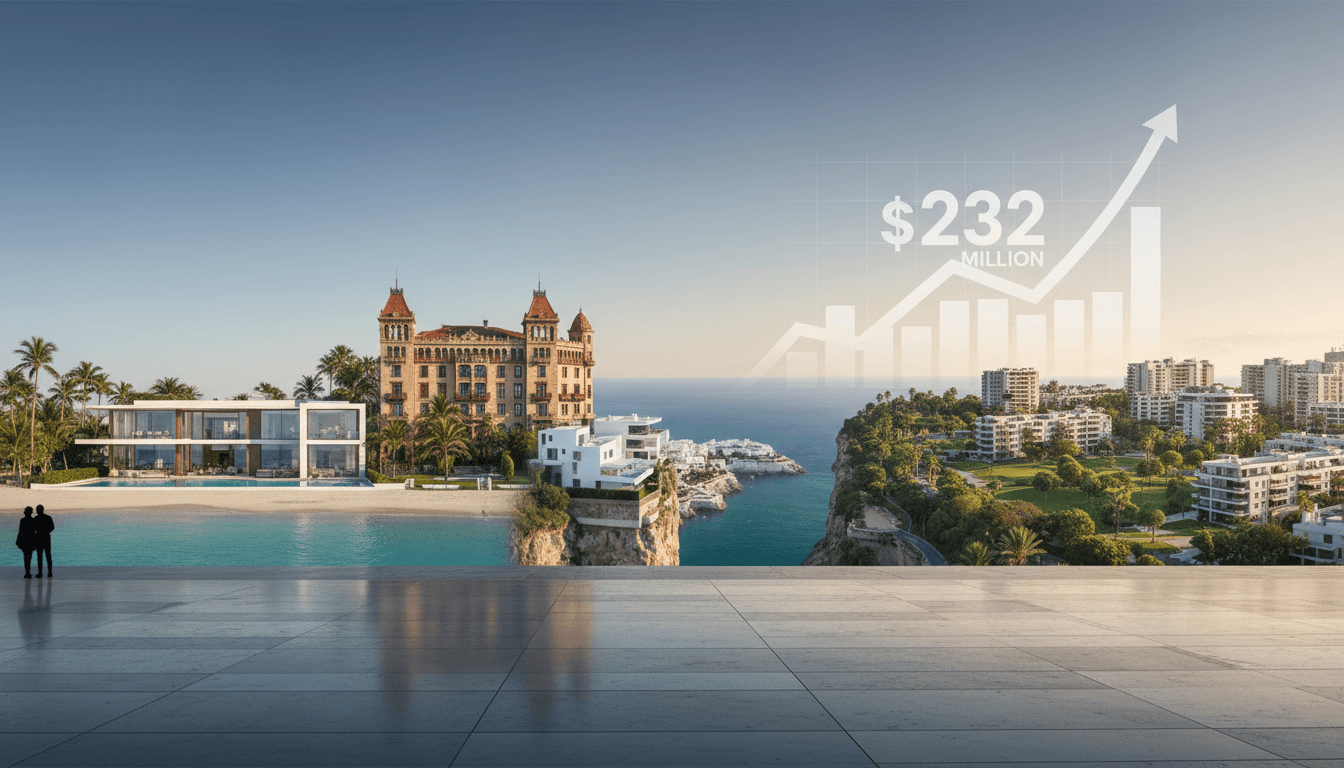
This is the part of Messi's portfolio that separates him from most athlete real estate coverage. His Spanish holdings are consolidated under a company called Edificio Rostower Socimi, which Messi has listed as a Real Estate Investment Trust on Spain's Portfolio Stock Exchange, a digital-only exchange, at a reported valuation of $232 million.
The REIT's holdings include seven hotels, along with commercial real estate spanning shops, offices, and residential property. Rather than simply owning trophy homes, Messi has structured a meaningful share of his wealth as an actual, formally listed property investment vehicle, a move reports suggest is driven more by tax efficiency than by needing the income, given his broader net worth.
The Miami Expansion Since 2023
Messi's US real estate footprint grew substantially after his move to Inter Miami. He first put down roots in South Florida in 2019 with a $5 million oceanfront condo purchase in Sunny Isles Beach. After joining Inter Miami in 2023, he added a considerably larger waterfront estate in Fort Lauderdale's exclusive Bay Colony neighbourhood for approximately $10.75 million, a nearly half-acre property with about 170 feet of private waterfront, eight bedrooms, ten bathrooms, a resort-style pool, and dual boat docks.
He also holds investment units in several high-profile Sunny Isles towers, including the Porsche Design Tower and Trump Royale, where he reportedly picked up two to three units around 2021 for a combined $1.8 million, properties that function more as investments than residences.
Recommended For You: Siddhant Chaturvedi Just Bought Two Apartments in the Same Mumbai Building in Six Weeks
A European Retreat and a Future Home in Argentina
Beyond Barcelona and Miami, Messi's portfolio includes a mansion in Ibiza, purchased in 2022 for £9.5 million, spanning over 20,000 square feet with eight bedrooms and its own private soccer pitch near the exclusive Cala Tarida area. Perhaps the most forward-looking property in his portfolio sits in his hometown of Rosario, Argentina, known as "La Fortaleza," a sprawling family compound built across three contiguous land parcels featuring 20 to 25 rooms, a private cinema, a full fitness centre, and underground parking for up to 15 vehicles.
Reports describe this specific property as the one most likely to become Messi's primary long-term residence once his playing career eventually winds down.
What This Portfolio Actually Signals
Taken together, Messi's real estate holdings show a genuinely different pattern than most athlete portfolios, less about accumulating trophy addresses and more about building durable, structured wealth across multiple asset types and jurisdictions simultaneously. The REIT structure specifically is worth paying attention to if you're tracking how top-tier athletes are increasingly professionalising their off-field finances, treating real estate as a formal investment vehicle with its own listed valuation, rather than just a collection of personal homes accumulated over a career.
By the numbers · ROSARIO, Argentina
38%
Capital-value growth, 2021–2025
50%+
Landscaped open area in new launches
24 mo
Window before supply catches demand